
Finding the School in Nagpur is not just about looking at board results or fancy buildings. Parents want schools that help children solve real-life problems and think creatively. Schools are moving away from memorizing things and towards understanding and thinking deeply. Every leading CBSE School in Nagpur is using activity-based teaching, making sure students really get it and hands-on learning to match the National Education Policy and new education reforms.
The Day Marks Stopped Meaning Understanding
He came home smiling one Tuesday with 98% on his science test. He was happy. You were happy too. You had promised him an iPad if he did well and he got it that evening. They had a time with high-fives and pizza.
Just seven days later, you were stuck in traffic on Wardha Road. You asked him, out of curiosity, why the sky is blue?
He stopped.
Looked out the window at you.
Umm… That wasn’t in the chapter, was it?
That moment changed everything.
It’s when many parents realize their child is getting marks but not really understanding what they’re learning. For a time, schools rewarded students for memorizing things, not for being curious. Education is changing fast with CBSE competency-based learning and new teaching methods 2026 in schools across India.
The question now is not how much your child can memorize, but what can your child do with what they know.
This is why parents looking for the Best CBSE School in Nagpur want schools that focus on understanding, creativity and using what you learn.
The Difference Between Rot learning vs Understanding
There’s a debate about rote learning vs understanding in education today. A student might memorize Newtons laws perfectly. Still not be able to explain why a cricket player moves his hands back when catching a fast ball. That’s the problem with memorizing things.
The Rote Learner
- Memorizes things without thinking
- Gets nervous when questions are different
- Needs to repeat things to remember
- Forgets things after exams
- Focuses on what to write not why it happens
The Conceptual Learner
- Understands the logic behind things
- Connects learning to life
- Can solve problems easily
- Remembers things for a time
- Enjoys exploring and being curious
The difference between learning and conceptual learning is clear in board exams today. Exams now have questions that need you to apply what you know in case studies and analytical thinking.
That’s why CBSE competency-based learning is central to education reforms.
What Is Conceptual learning in science?
The idea of learning in science might sound complicated, but it’s simple: children learn better when they experience things before memorizing them. Instead of reading theories first, students work with real-world examples.
Example 1: Learning Fractions Through Sharing
Instead of starting with numbers, students divide pizzas, chocolates or chapatis equally among friends. They understand the idea of fractions Then symbols start to make sense.
Example 2: Physics Through Daily Life
A child playing tug-of-war naturally understands force and resistance. Rolling a marble on tiles versus rough grass teaches friction better than memorizing textbook lines. This is conceptual learning in science.
Example 3: Chemistry Through Experiments
Instead of memorizing pH values, students test things like turmeric, soap water and lemon juice to see reactions directly. When learning is hands-on and visual, memory becomes natural. Schools using the new teaching methods in 2026 focus heavily on these practical approaches.
What Is Conceptual learning in Math?
Mental Techniques: Students learn when and how to use mental math techniques in place of unnecessary paper-and-pencil work. For instance, 99 + 99 + 99 = _____ Rather than approaching this as a typical vertical addition problem, students are instructed to consider the following: “100 + 100 + 100 – 3 = 300 – 3 = 297.”
Visual Learning: Abstract ideas are made tangible through the use of pictures, graphs, and manipulatives. Students can use fraction bars to comprehend the need to find a common denominator for 1/4 + 1/3.
Verbal Processing: Students gain the ability to articulate their ideas, which enhances comprehension and identifies knowledge gaps.
Tactile Learning: Students can physically experience mathematical concepts through hands-on activities using dice, counting chips, and other manipulatives.
Written Practice: Concepts are reinforced in an orderly, progressive way using structured worksheets.
Why CBSE competency-based learning Is the Future
New education rewards:
- thinking
- creativity
- solving problems
- talking to others
- thinking deeply
Under the CBSE competency-based learning students are evaluated on:
- understanding concepts
- using knowledge
- solving problems
- thinking critically
- understanding the real world
This change is making schools redesign classrooms entirely.
Inside a Modern Classroom in 2026
Walk into a classroom today and you’ll notice something different. The silence is gone. Students talk, discuss, experiment and work together all the time. That’s because new teaching methods 2026 prioritize participation over listening.
Traditional Classroom
- Teacher talks all the time
- Students copy notes
- Homework is just repeating things
- Exams test memory
Modern Classroom
- Students ask questions
- Group discussions are common
- Hands-on activities are key
- Tests evaluate understanding
For example:
Instead of saying memorize this theorem, teachers ask can you figure out why this theorem works. This change is central to CBSE competency-based learning.
How Parents Can Identify Genuine Conceptual Schools
If you’re considering School admission in Nagpur, ask questions when visiting schools. Don’t just look at students’ photos or board percentages.
Ask questions like:
● Can I see student projects
Good conceptual schools proudly show experiments, models and creative assignments.
● How are mistakes handled
In learning environments, mistakes are seen as chances to learn.
● How are teachers using teaching methods 2026
Progressive schools train teachers in modern methods and hands-on learning.
These questions show if a CBSE School in Nagpur really values understanding or just talks about results.
What Parents Can Do at Home
Parents play a role in helping children move from memorization to thinking.
1. Ask why often
Instead of asking what marks you got, ask why do you think this happens.
2. Encourage teaching
If a child can explain something simply, they really understand it.
3. Make curiosity normal
Children should feel okay saying, I don’t know. That’s where real learning starts.
4. Avoid relying on shortcuts
Shortcuts might help for a while, but understanding gives lifelong confidence. The future belongs to children who can think on their own, not just repeat answers.
Why Centre Point School Stands Out
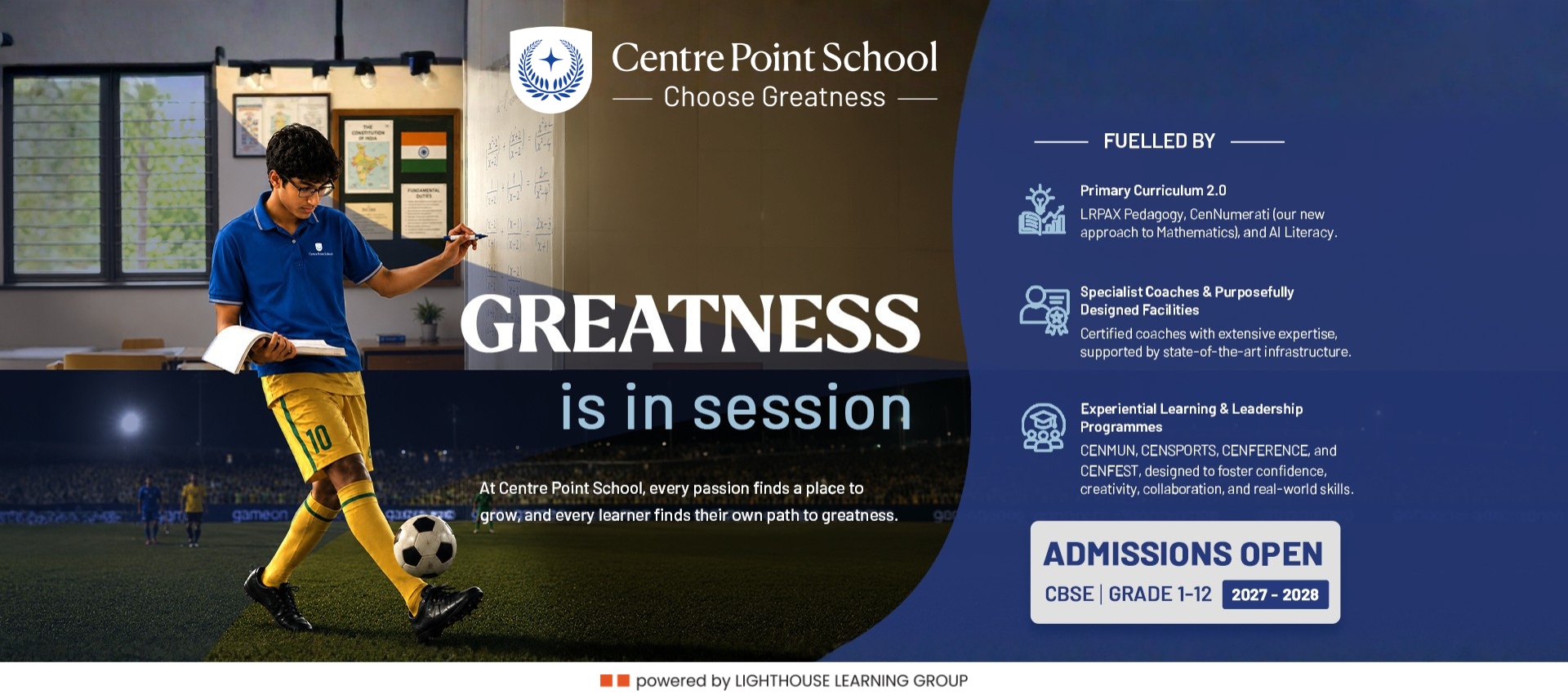
Centre Point School is a school that people trust to prepare students for the future. This school provides an education and helps students understand things in a better way. It is a known School in Nagpur. It teaches students in a way that is based on what they can do. The school also gives students hands-on experience and encourages new ideas.
For people who want to admit their child to a CBSE School in Amravati Road, do visit Centre Point School. This school provides an environment where children can think and ask questions. It helps children grow into leaders. Centre Point School is a place where children can really grow.
FAQs
What is CBSE competency-based learning?
CBSE competency-based learning focuses on understanding, application and problem-solving instead of only memorizing information.
Why is conceptual learning important in science?
Conceptual learning helps students understand how science applies in real life, making learning more engaging and long-lasting.
What is the difference between memorization and understanding?
Memorization focuses on recalling information, while understanding helps students apply concepts practically and solve problems independently.
Are the new teaching methods 2026 better for board exams?
Yes. The new teaching methods 2026 improve analytical thinking and application skills, which are important in modern CBSE exams.
How can parents choose the Best School in Nagpur?
Parents should evaluate teaching methods, classroom engagement, student projects, and overall child development while selecting the Best School in Nagpur.
Why are schools moving away from rote learning?
Modern education values creativity, problem-solving, and adaptability, making conceptual understanding more important than memorization.
What should parents ask during School admission in Nagpur?
During School admission in Nagpur, parents should ask about teaching methods, practical learning, teacher training, and competency-based education.
Which CBSE School in Nagpur focuses on conceptual learning?
Many progressive schools now follow competency-based education, including Center Point School, which emphasizes conceptual clarity and holistic learning.